peahttps://nevermindthedigital.wordpress.comContact Center industry professional, with over 20 years experience in technical support, project management, project delivery, product management and business development in the TLC and Contact Center application space.
Specialties: Digital channels, Customer Experience, Contact Center, CTI, CRM, technical writing, problem solving, product management, product line introduction, telco solution design, project management.
While in a call with a dear friend, she pointed out I am such a good storyteller and I should consider writing a book…
This sparked a core memory of more than 10 years ago: 2015, my first try at NaNoWriMo (today the site is down for a number of controversial reasons, but back then it was just a honest exercise of writing for people who wanted to have fun, and has been a wonderful experience for me).
I was then working in a role that implied international travel almost 5 days a week and my kids were still relatively small. In airport lounges and landing planes, I wrote a book of children stories to make up for the lost time with my own kids, and even had them make the drawings in the book! (its karma will somehow be balanced with their upcoming years of analysis, but it’s definitely another story).
So I went and searched for the book, and read it, eleven years later. I didn’t remember any of the stories, but overall thought “well, it’s not bad!”. Back then, I used a self-publishing platform that somehow still exists but is very expensive and basically unknown in my own country – the book is in italian!- so I decided to move it to a more known platform, and a couple of weekends of revisions later, it’s finally ready!
Also, it came out the same day that my other book, the FinOps one, did (this one is in english, but it’s a different story and a different post).
Coincidence? I don’t think so. 🙂
If you want to learn some italian by reading quirky stories, here’s the link:
it’s that time of the year again, when I look back and see how many books have kept me more or less sane throughout the year.
Here’s the stats and the list, and since 2025 marked my 10 years’ experience with e-reading, I am also posting some widers stats, because basically I am that nerdy. 🙂
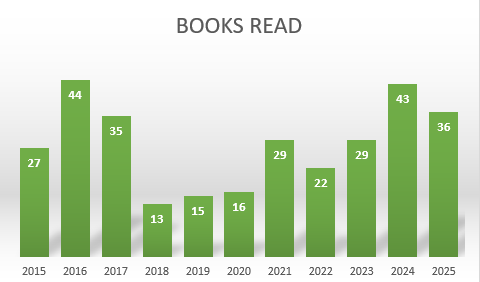
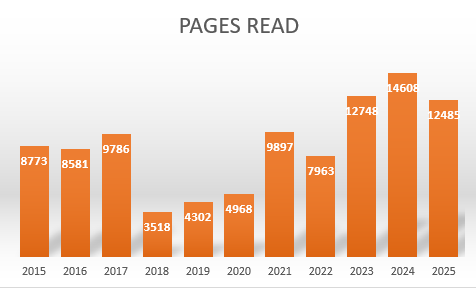
From 2015 to 2025 I have read 309 books (they would definitely fill a library shelf), for a total of 97629 pages. Here’s a couple of graphs for the visual people. Although I did read a good number of books in 2016, if you look at pages read, my most prolific years were the last 3, with more than a thousand pages per month read.
And here’s the full 2025 list:
Orbital,Samantha Harvey ,138
The Marriage Portrait,Maggie O’Farrell,448
Hamnet,Maggie O’Farrell,321
This Must Be the Place,Maggie O’Farrell,401
The Distance Between Us,Maggie O’Farrell,354
Our Evenings,Alan Hollinghurst,494
Heft ,Liz Moore ,353
The Unseen World,Liz Moore ,418
Noi due siamo uno,Matteo Spicuglia,185
The Edible Woman,Margaret Atwood ,353
The Road,Cormac McCarthy ,324
The Women,Kristin Hannah ,476
Blue Sisters,Coco Mellors,514
The Woman Who Lost Her Soul,Bob Shacochis ,738
My Friends,Hisham Matar ,461
Silent Spring ,Rachel Carson,155
We Do Not Part,Han Kang ,371
The City and Its Uncertain Walls,Haruki Murakami ,445
Elizabeth: A Novel of the Unnatural ,Ken Greenhall,146
The Safekeep,Yael van der Wouden ,262
Careless People: The explosive memoir that Meta doesn’t want you to read,Sarah Wynn-Williams ,390
Empire of AI: Inside the reckless race for total domination ,Karen Hao,479
Consider Yourself Kissed,Jessica Stanley ,337
Ubik,Philip K. Dick ,241
Confessions Of A Crap Artist,Philip K. Dick ,258
The Berry Pickers,Amanda Peters,295
Il quaderno di Maya, Isabel Allende ,403
The Five People You Meet In Heaven, Mitch Albom ,240
This Is How,M.J. Hyland ,384
Ella Minnow Pea: A Novel in L:etter ,Mark Dunn,204
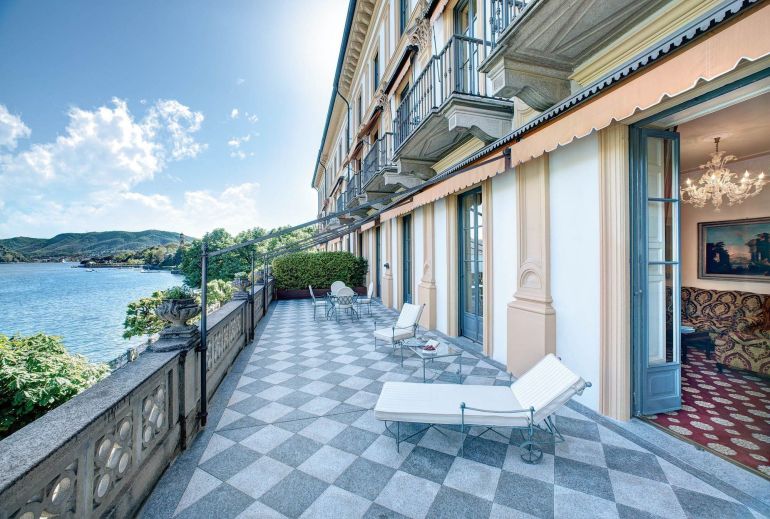
It was an evening like no other when we received that 5pm call that would take us on an unexpected adventure. The US president would be visiting a luxurious 6-star hotel by Lake Como, and it seemed he couldn’t bear to be without his favorite messaging system. In true tech support fashion, my colleague Max and I found ourselves rushing there (an hour drive from Milan) to install the hardware and software necessary to meet the president’s demands, all under the veil of night, so that the day after it would all be up and running.
Max, with his rebel look and perpetual tan, and I, equipped with a trusty toolbox, navigated the winding roads of Lake Como in our quest to set up this makeshift command center in the heart of opulence. As we arrived, we were greeted by the hotel staff, who looked at us with a mixture of curiosity and confusion.
Max couldn’t resist a sarcastic quip, “I hope they have a red carpet rolled out for us, too.”
We were ushered into the hotel’s extravagant meeting room, where we quickly set up the necessary equipment, praying that the president’s need for communication was as urgent as they made it out to be, and then headed into our comfort space: the datacenter, where all the opulence was suddenly gone, and we were back with our dusty and noisy servers! After a few hours of late-night work, we finally managed to get the messaging system up and running to presidential standards.
As the first rays of dawn broke over the tranquil waters of Lake Como, Max and I exchanged exhausted but triumphant glances. We had saved the day (or rather, the night) for the President and our company. It wasn’t every day that you got to play tech superhero with such a scenic backdrop. We thought maybe they would offer us a room, or at least breakfast, but no – just a thank you and goodbye. Max grinned, rubbing his hands together in mock excitement. “Well, another glamorous night on the job. Who would’ve thought we’d be the IT heroes of a presidential rendezvous?” We headed straight back to the office for our 9am coffee, sharing stories of our impromptu adventure with our colleagues, who couldn’t help but chuckle at the surreal nature of our work.
That time when the US president was visiting a 6 stars hotel by lake Como and suddenly their staff decided he could not do without his favorite messaging system on the internal telephone line. Me and my colleague Max then had to run during the night to install the hardware and the software in this mega fancy hotel – and then came back at dawn with a job well done and having seen a beautiful sunrise by the lake.
Little did I know that my arrival would coincide with a turning point for our company. The word was out – our support team was so great that customers and partners were flooding our lines, seeking assistance with our call center products and with the PBX. It was a bittersweet scenario – the demand was through the roof, but the phone lines were clogged to the brim.
In our tech sanctuary, huddled in the corner of the office, my colleagues Max (the PBX uber guru), Tess (the ever-practical business manager) and I pondered our situation. The idea of a dedicated tech support hotline had been brewing for a while, but now, it was more urgent than ever.
Max, with his tan, skinny super stylish clothes, and penchant for quirky solutions, suggested, “Why don’t we pick an easy-to-remember number, like 333? It’s like 911, but for tech support!”
Tess, always pragmatic and looking for a solution that made business sense, nodded in approval. “That’s a great idea, Max. We need to make it simple for our customers to reach us. Now, we just need to make it happen.”
With the plan in place, we set our sights on the weekend, the perfect time for a bit of office remodeling. Armed with an abundance of coffee and the promise of a free lunch, we went about the task of configuring the new hotline.
First up, it was my turn to record the welcoming message for the tech support hotline. As the “new kid” in the team, I was a bit nervous, but with Max and Tess cheering me on, I gave it my best shot.
“Welcome to the Tech Support Hotline – your direct line to our team of engineers. Whether you’re dealing with a PBX, a call center, or messaging system trouble, we’re here to help! Please select from the following options to get started.”
I might have snuck in a bit of sarcasm to lighten the mood, and my colleagues seemed to appreciate it. Max, in his usual jesting manner, commented, “You could sell sand in the desert with a welcome like that! Let’s hope they don’t decide to turn up here!”
Tess, being the voice of reason, helped me fine-tune the message, making sure it struck the right balance between welcoming and professional. After a few takes, we had a winner.
Next up was configuring the Interactive Voice Response (IVR) system, which would help route customers to the right branch and, eventually, the right tech expert based on the nature of their issue. This was a fun but challenging task, as we had to ensure that every key press led customers to the right destination.
Max, with his knack for creativity, decided to make this IVR system a bit of a maze. “Let’s make it fun,” he said. “Customers won’t feel like they’re navigating a labyrinth of technology; they’ll feel like they’re on an adventure!”
Our IVR started with some cheeky prompts:
– “Press 1 if your computer thinks you’re speaking in tongues.”
– “Press 2 if your PBX is being more cryptic than a spy novel.”
– “Press 3 if your call center software is in a mood swing.”
Tess, always the voice of reason, gently reminded us that customers needed to understand the options clearly. “While fun is great, we must also be clear and concise. Let’s keep the adventure but make sure our customers get where they need to be.”
So, with a touch of humor and a lot of precision, we designed our IVR system, making sure that customers could easily find the right path to their solution.
As Monday morning dawned, we were all on the edge of our seats, waiting for the calls to pour in. With a bit of trepidation and a whole lot of excitement, we pressed the button that brought 333 to life.
The first call came in, and our freshly minted IVR system took center stage. A customer, likely bewildered by the array of options, pressed 2, hoping to unveil the mysteries of their PBX. They were greeted by our super tech expert Max, who was ready to tackle the issue, and the journey of 333 had begun.
Over the weeks and months that followed, the tech support hotline became a staple of our company. The word got out that 333 was the number to call for all telecom equipment-related queries. The flood of calls was no longer a problem, we now had technology to our aid; it was a testament to our growing reputation as the go-to company for telecommunications equipment worldwide, and now we also had statistics and reports from my beloved CMS Solaris machine.
As years rolled on, the company continued to flourish. The tech support hotline became an integral part of our identity, and we celebrated every call that came through. Our team grew, and our reputation soared.
Looking back, that weekend of configuring the IVR system was a defining moment in our journey. The decision to make 333 our tech support hotline had not only simplified the process for our customers but also added a touch of whimsy to our otherwise serious industry.
The challenges and humor of those days are now fond memories, cherished with Max, Tess, Mr F., and the other tech guys who eventually joined the team. It was a time when we transformed a flood of calls into an organized system that welcomed customers and directed them to the solutions they needed. Our hotline became a symbol of our dedication to exceptional customer service, and it was a key factor in our rise to becoming the number one company for telecom equipment in the world.
As we look to the future, we know that technology will continue to evolve, and new challenges will arise. But with the lessons and laughter from our past, we’ll be ready to face whatever comes our way, one witty greeting and IVR maze at a time.
It’s 1997 and you just joined the team – you realized customers are getting the word of this great support team and so calls start to flood in – but hey your company literally makes call center products within the PBX! So, with Max and Tess (the business manager) you plan to pick a number in the private directory that will be the tech support hotline: from now on called “the 333”. You are drafted to record the welcome messages and all the IVR messages to select the right branch and go to the right guy according to the technology. Then one weekend with the team you install and configure everything and wait for Monday to begin. Use witty and funny tone, add conversations with colleagues and test of IVR messages. In the end this becomes a staple of the company for the next years to come, while the customers flock in and this becomes the #1 company for telco equipment in the world.
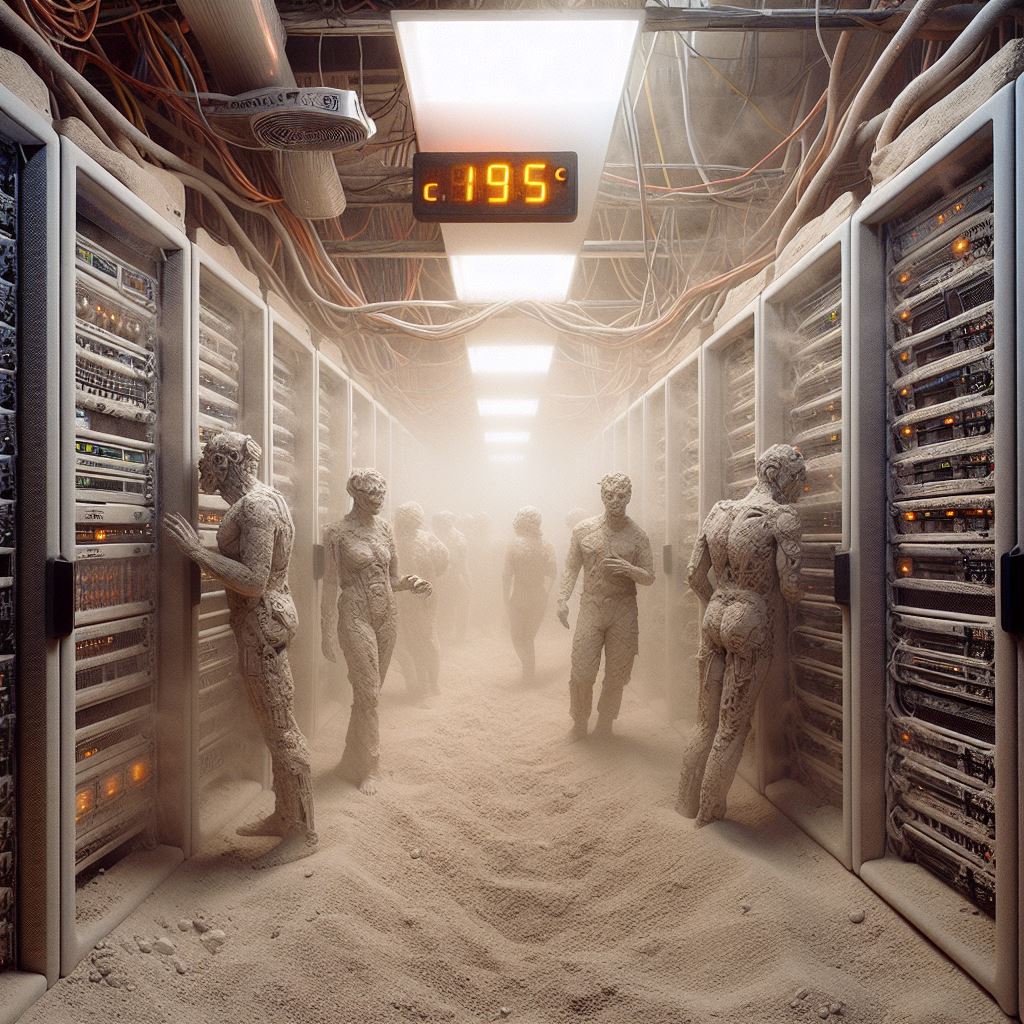
Ah, the glamorous world of datacenters in 1997—a chilly, dusty symphony of servers and cables where the attire of the day includes a blanket and a scarf, and the soundtrack is a never-ending hum of coolers. Let me take you on a journey through these tech wonderlands where the air is crisp, the servers are loud, and the fashion choices are as unconventional as the architecture.
First things first, let’s talk about the temperature. Walking into a datacenter is like stepping into a freezer. It’s a bone-chilling 19°C, and suddenly you find yourself envious of penguins for their natural insulation. So, my ingenious solution? Always keep a blanket and a scarf in the car—a mobile cocoon for those unexpected deep freezes. You never know when you might have to endure an extended stay in this cryogenic paradise.
And then there’s the dust. Oh, the dust! Even the newest, shiniest datacenters are not immune to the omnipresent cloud of particles. It’s like a perpetual dust storm, and you learn quickly to embrace the casual attire—jeans and a T-shirt become your datacenter uniform. Why? Well, the dust settles everywhere, and there’s no point ruining a perfectly good suit when you’re wading through the digital desert.
Now, let’s delve into the technical marvels that populate these hallowed halls. Servers, the unsung heroes of the digital age, stand like sentinels, humming with the promise of computing power. Picture this: rows upon rows of rack-mounted servers, standing tall and proud, their lights blinking like a dazzling city skyline. Each server, a digital superhero ready to crunch numbers and process data at the speed of thought.
Cabling, the unsung spaghetti of the tech world, weaves a mesmerizing tapestry across the datacenter floor. Color-coded and meticulously organized, these cables form a complex network that rivals the neural pathways of the human brain. It’s a dance of copper and plastic, a ballet of connectivity that ensures seamless communication between servers, storage, and the outside world.
Storage, the silent powerhouse, lurks in the shadows, quietly holding the digital secrets of the universe. Massive magnetic disk arrays, like ancient tomes on library shelves, store megabytes of data, waiting to be summoned at a moment’s notice. It’s the grand repository of information, the silent guardian of the digital realm.
Cooling, the unsung hero of server survival, whirs and hums in the background. Giant air conditioning units battle the relentless heat generated by the army of servers, ensuring they don’t break a sweat—or worse, overheat. It’s a delicate dance of thermodynamics, a ballet of cool air and warm exhaust that keeps the servers humming along happily.
Power supply, the lifeblood of the datacenter, flows through the veins of every server and storage unit. Redundant power feeds, backup generators, and uninterruptible power supplies form a safety net, ensuring that the digital heartbeat remains steady even in the face of electrical hiccups. It’s a power play of epic proportions, where uptime is the ultimate goal.
Amidst the cold, the dust, the noise, and the technical symphony, you find yourself yearning for moments of solitude. The continuous hum of servers becomes a lullaby, and after a few hours, you crave the sweet sound of silence. A paradox, perhaps, in a place designed for constant activity, but even the most dedicated datacenter denizens need a break from the cacophony.
So, there you have it—the quirky, funny, and utterly fascinating world of datacenters in 1997. A realm where temperatures are frigid, dust and noise constant companions, and servers are the unsung heroes of the digital age. Welcome to the heart of technology, where the cool air, the whirring servers, and the colorful cables create a symphony of data that shapes the digital landscape.
It’s 1997 and you start working regularly, within your job for a major american telco, in datacenters. Your first impression is the cold – and in fact you learn to keep a blanket and a scarf in the car all the time just in case you need to spend a considerable amount of time at 19°C. Also, even the newest sites are super dusty, so you adapt your attire to casual and keep a change in the car, just in case. Then there is the noise – you notice it in the first minutes and it’s almost comforting. Yet after 3-4 hours you realize you get tired of the continuous noise of the servers’ coolers and need some empty sound of silence. Re-write and describe how datacenters are built in 1997, using lots of technical examples for servers. storage, cabling, cooling and power supply. use a witty, funny, quirky tone.
When I finally received the job offer from the telecommunications company to install and fix PBXs adjunct software, I couldn’t say no. Little did I know that my first day would be filled with interesting encounters and a dialogue with my manager that would make me feel like I’d hit the jackpot.
Walking into the office that morning, I felt a mix of excitement and nervousness. My boots clacked on the carpet floor, and the soft hum of computers filled the air. The employees, mostly men in drab suits and ties, turned their heads to look at me. Their eyes widened, and I couldn’t help but notice some raised eyebrows and hushed whispers as I walked past cubicles.
As I approached the front desk, a receptionist gave me an odd look. “You must be the new engineer,” she said with a touch of surprise in her voice.
I smiled, my sarcasm already creeping in. “So, it seems, unless I picked the wrong elevator floor, and this is indeed a marketing company?”
Her startled expression quickly shifted to a forced smile as she handed me a visitor’s badge. “Welcome. I’m sure you’ll do great.”
I nodded and headed toward the office of my new manager, Mr. F. He was considered a total guru as in his previous job he was asked to travel to the USA and work on building the telephony cards for the Italian market, so I was already in awe. I rapped my knuckles on his open door to announce my arrival.
“Ah, welcome, Paola! He said, extending his hand.
I shook it firmly, never letting my confidence waver. “I’m here finally! Ready to tackle whatever technology you will throw at me.”
Mr. F. gave me an appraising look, one that was somewhere between curiosity and skepticism. “You’re quite young for this job, aren’t you?”
I leaned against the edge of his desk, grinning. “Age is just a number, Mr. F. I know what I am doing and I’m willing to work hard.” Inside I was shaking like a leaf trying to not make it too obvious.
He chuckled; a bit taken aback. “Well, that’s the spirit, I suppose. We have a Solaris system that needs some attention. Follow me, and I’ll introduce you to the team.”
We walked through the maze of cubicles, and I couldn’t help but feel the weight of judgmental eyes on me. The guys in the office whispered to each other, and I could hear the word “girl” thrown around in hushed tones. It didn’t faze me one bit (or so I pretended). If anything, it fueled my determination to prove them wrong.
In the office room, Mr. F. introduced me to the team, and I couldn’t help but notice their surprised expressions. The resident “tech expert” was usually a stereotypical bespectacled nerd, but here I was, a redhead with a confident smirk.
I have something to show you,” Mr. F said with a mischievous grin.
I raised an eyebrow, curious. “What’s that?”
He led me through a series of winding corridors until we reached a door marked “Laboratory.” . He pushed it open, and my jaw practically hit the floor. Inside was a paradise for any tech enthusiast. Rows of computers, stacks of gadgets, and all sorts of cutting-edge equipment filled the room. It was a techie’s dream come true.
My eyes widened with excitement. “Is this…?”
Mr. F. nodded. “This is your playground, your testing ground. Feel free to experiment, innovate, and create to your heart’s content. We’ve been looking for someone with your skills and passion, and I have a feeling you’ll make some remarkable discoveries here.”
I couldn’t contain my enthusiasm. “This is amazing! I can’t believe you’re giving me access to all of this.”
The room eventually got a handwritten sign on the door “il Bel Lab” which means the “pretty” lab, but also referred to THE Bell laboratories that were our constant source of awe with their patents and inventions.
I rolled up my sleeves and began assessing the boxes and parts that were amassed in the room: this was paradise! One of the first assignments was in fact, to build one of the adjuncts, called the CMS. This was a Solaris machine, and understandably everyone was scared to just enter the password.
As the day went on, I was able to install the software and connect it to the PBX to get the stream of data from it. The initial skepticism of my colleagues began to fade, and they started coming to me with their questions on the CMS, seeking my expertise. The office atmosphere had shifted, and I reveled in the change.
By the time the day was winding down, I had earned the respect of my coworkers and had a sense of accomplishment that was almost tangible. As I packed up my tools, Mr. F approached me.
He patted me on the back. “You’ve proven yourself today. We believe in you, and we want to see what you can do. Take your time, familiarize yourself with everything, and let your imagination run wild.”
I felt like a kid in a candy store. This was more than I could have ever hoped for. “Thank you, Mr. F. I won’t disappoint you.”
As he left me in the laboratory, I was practically dancing with excitement. I couldn’t believe my luck. Here I was, a young woman who had just been given access to a treasure trove of tech wonders. It was a dream come true.
Over the following weeks and months, I dived headfirst into my work, often spending late nights in the laboratory, most of the time with the help of my fellow coworkers who helped me on the PBX side. I experimented with new software, tweaked hardware, and came up with innovative solutions to improve the installation process. I collaborated with the rest of the team, and they soon realized that I was an invaluable asset.
I wasn’t just the “new girl”; I was the computer wizard who could fix anything and improve everything. My confidence and my wit had won them over.
I was now an engineer working for a giant American telecommunications company, responsible for handling mission-critical servers, often in the wee hours of the night or on weekends. The job had its ups and downs, but it was a time when we were on the forefront of technology, ensuring that essential communication systems remained up and running. In the next posts, I will share a few anecdotes that capture the essence of those moments, accompanied by the witty and sarcastic tone that defined our work culture.
It’s 1997. you are a 23-year-old girl with great computer skills. you are hired by a telecommunications company to go install and fix PBXs and adjunct software. describe your first day of work with wit and sarcasm as people act a bit funny seeing you are a woman and not the usual eyeglassed nerd stereotype. Add a dialogue with your manager when he shows you the laboratory where you can play and test as much as you want and it’s your dream come true.
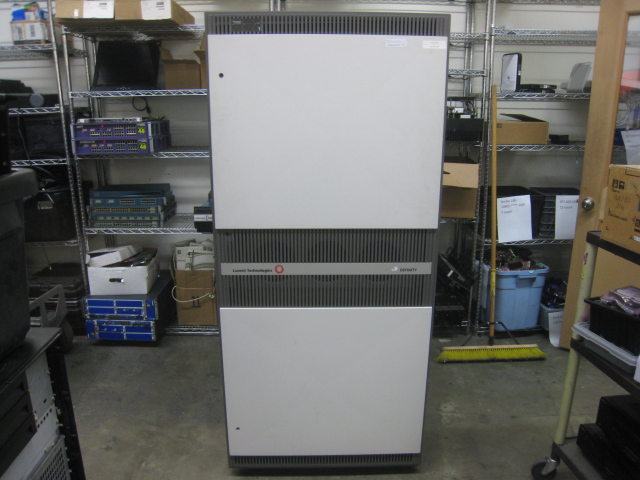
In 1997, I stepped into the world of telecommunications, where one of the key (and first) players was the AT&T Definity switch, later known as Lucent Technologies’ Definity switch, after a company’s spinoff for their enterprise communications products. This switch was a powerhouse in the realm of telephony, designed to handle both analog and digital telephony and to interface with various adjuncts, including servers equipped with specialized software for reporting, business intelligence (BI), messaging, and Interactive Voice Response (IVR).
The Definity switch was the heart of many corporate phone systems in its heyday. It was a Private Branch Exchange (PBX) system that allowed organizations to manage their phone lines, extensions, and calls internally. What made the Definity switch so versatile was its ability to handle both analog and digital telephony.
Analog telephony, characterized by the use of electrical signals to transmit voice and data, was still common in 1997. Many telephones and fax machines used analog connections, and the Definity switch had the capability to interface with these analog devices seamlessly. It could route analog calls, manage voice mailboxes, and even handle the transfer of faxes between users (only through its external messaging system).
On the other hand, digital telephony, which involved encoding voice and data into binary code for transmission, was emerging as the future of telephony. The Definity switch excelled in this domain as well. It could manage Digital Signal Processor (DSP) resources for tasks like voice compression and encryption. The switch could interface with digital telephones and provide features like call waiting, call forwarding, and three-way calling, as long as 6 party conference calls and at some point, a whole deal of call center logic and queuing directly within the switch. VoIP and IP telephony were still far in sight…
The true power of the Definity switch lay in its ability to interface with adjuncts, specialized servers that hosted software applications designed to enhance the telephony experience. These adjuncts were connected to the switch via serial connectivity, allowing for real-time data transfer and communication.
Reporting and Business Intelligence (BI) Servers: These adjuncts were essential for organizations seeking to analyze their call data. They collected and processed information related to call volumes, call durations, and other call statistics. The specialized software running on these servers could generate detailed reports, enabling businesses to make informed decisions regarding their telephony systems. With access to these reports, organizations could optimize their call center operations, improve customer service, and identify areas for cost reduction. The CMS (Call Management System) was my pride and joy, as it was hosted on a Sun Solaris platform where we would provide the hardware and the software (preinstalled) to our premium customers.
Messaging Servers: Messaging was a crucial aspect of telephony in the late ’90s. Organizations relied on messaging servers to handle voicemails and fax messages. The Definity switch interfaced with these servers, routing voicemails and faxes to the appropriate user’s mailbox. Users could access their messages through their telephones or, in some cases, through computer-based applications. Messaging servers streamlined communication within businesses, allowing for quick and efficient message retrieval. Here we were talking about a SCOUnix server, with our proprietary software named Audix that would handle all the real-time requests coming to and from the PBX. The server also hosted the users mailboxes, with their voice and fax messages that could then be backed up on tape.
Interactive Voice Response (IVR) Servers: IVR servers were at the forefront of customer service and call center automation. The Definity switch integrated with these servers to provide automated responses and gather information from callers. The specialized software on these servers, named Conversant, enabled businesses to create interactive menus, handle customer inquiries, and route calls to the appropriate agents. This technology significantly improved call center efficiency and customer satisfaction and was obviously hosted on SCOUnix OS.
The serial connections between the Definity switch and these adjuncts were crucial for data exchange. They allowed the switch to communicate with the servers, providing information about call routing, call statuses, and user preferences, along with voice messages and additional data transmitted. This integration was the backbone of efficient telephony operations and was instrumental in creating a seamless and productive communication environment within organizations.
The AT&T-then Lucent Technologies Definity switch, with its capability to handle analog and digital telephony, and its ability to interface with specialized adjuncts via serial connections, played a vital role in shaping the telecommunications landscape of its time. It empowered companies to manage their phone systems effectively, providing the foundation for more advanced telephony solutions that have since evolved with the ever-changing technology landscape.
We started talking about VoIP and IP communications only around the years 2000-2001, where this new technology would disrupt the voice lords in more than one way… but back then, this was still almost sci-fi.
You start working in 1997 on an old at&t, now lucent technologies, Definity switch. describe how the switch works with analog and digital telephony and how it interfaces via serial connection to special adjuncts, servers that have a specialized software (either for reporting and bi, or for messaging, or for IVR).
It was a day etched in the annals of our office’s history, a comedy of errors that could rival a Shakespearean farce.
It all began innocently enough, with a mischievous glint in our eyes and the clickety-clack of keyboards as we concocted what we thought was a harmless prank. You see, Davide, our beloved grumpy bear, was known for his aversion to anything outside his cozy tech cave. So naturally, the idea of sending him off to the wilds of Montana for a year-long project seemed like the ultimate jest.
With devilish glee, we drafted an email fit for the ages, meticulously crafting every detail to mimic the style and tone of our esteemed General Manager. We even went so far as to spoof the email address, ensuring it appeared as though it came straight from the top.
The contents of the email were nothing short of elaborate, outlining Davide’s supposed assignment in Montana, complete with project details, timelines, and even a faux itinerary. We spared no detail, making it seem as convincing as possible, all the while stifling our laughter like mischievous schoolchildren.
With trembling hands and barely contained excitement, we sent the email off into the digital ether, watching with bated breath as Davide’s unsuspecting inbox received the faux missive.
And then, the moment of truth arrived. Davide, pale as a ghost and visibly shaken, burst into our midst, his frustration palpable as he waved the email in our faces.
“What is this?!” he demanded, having printed the note, adding an extra layer of drama to the scene.
Suppressing giggles behind our hands, we feigned innocence, pretending to read the email for the first time. “Oh Davide, how could this have happened?” we exclaimed, struggling to contain our amusement.
As Davide’s panic reached a fever pitch, it became clear that the prank had spiraled out of control. He was on the brink of storming into the General Manager’s office, ready to decline the invitation to Montana in person.
With a collective sigh, we finally came clean, revealing the truth behind the elaborate ruse. Davide’s relief was palpable, followed swiftly by a mixture of amusement and exasperation as he realized the extent of our deception.
In the end, the “Montana Incident” served as a cautionary tale, a reminder that even the best-laid plans can unravel in the most unexpected ways. But amidst the chaos and laughter, it also brought our team closer together, forging bonds that would withstand even the wildest of pranks. And as for Davide, well, let’s just say he’s never looked at his inbox the same way again.
write about that time when you and your colleagues wrote a very detailed email using the branch General Manager as the sender (you could send it directly to the mail server back then) stating that one of the developers, Davide, was to be sent in Montana for a 1 year project starting in 2 weeks. We decided to spill the beans only when Davide came to us pale and frustrated as he did not know how to turn down the invite and was almost going through the GM’s door!!!
One day, I had one of my greatest computer lessons that I still cherish to date. Oh, what a nightmarish moment that was. I’d had my fair share of dealing with frustrating users from hell, and after a particularly maddening interaction, I was feeling a bit more snarky than usual. It was the umpteenth time I’d had to explain the same super easy and documented procedure to the same user, and patience had worn thin. Without thinking, I composed an email that was both condescending and scolding, outlining the solution in the harshest tones I could muster. A classic RTFM message.
I hit the send button, thinking that it would finally get the message across. Little did I know that I had set myself up for a truly cringe-worthy situation. As I closed my email client and leaned back in my chair, I got a reply of the message from a guy who was definitely not the intended recipient! My heart sank as I realized what had happened.
With a sense of impending doom, I opened the email and scrolled right, into a hidden part of the message to check the recipients. My laziness had me copy an old email with the procedure that was originally sent to…well… everyone this side of the ocean! I had inadvertently sent my scathing email to all the pharmaceutical representatives in Europe. Every. single. one. of. them.
My desk, which had been a place of tech gadgets and quirky humor, suddenly felt like the scene of a disaster. Panic set in as I realized the implications of my mistake.
There were dozens of people across Europe who would receive an unsolicited message from me, their tech support contact, that was nothing short of embarrassing as it was clear I was scolding one specific user.
But, hey, this was the 90s and the email was still not mainstream. This meant that the users would have to dial into the server in order to download the message, but until then, I could still delete it from the server mailboxes. I had to act quickly. This was to date the most daunting task of all: manually deleting each and every offending message from each user directory of the server. It was a long and grueling night, typing away through countless messages, feeling the weight of each delete command as I tried to erase my unfortunate blunder. It was a painstaking process, and I couldn’t help but cringe with every click.
As the sun began to rise, I finally cleared the last of the emails from the server and sent out an apology email to those 5 users who did receive the message. The damage control was complete, but my pride was still in tatters. From that point on, I vowed to be extra cautious with my messages, rereading them at least ten times before hitting the send button. The fear of making the same mistake again loomed over me like a dark cloud, and still does!
My colleagues, those who had often joined me in light-hearted banter and sarcastic responses to absurd user queries, were surprisingly supportive. They understood that we all had our moments of frustration, and they offered their own stories of email mishaps to make me feel a little less foolish.
In the end, my unintentional message blunder served as a humbling reminder that no matter how experienced and knowledgeable we are in the world of tech, we’re all capable of making mistakes. It was a lesson in humility, professionalism, and the importance of treating every user with respect, no matter how challenging they might be. And it was a lesson I carried with me throughout my career, ensuring that my interactions with users were always marked by patience, empathy, and the utmost professionalism.
From that day forward, I learned to find more constructive ways to deal with frustrating user interactions, channeling my sarcastic wit into helpful and informative responses. I had come to understand that tech support wasn’t just about fixing technical issues; it was also about providing excellent customer service and ensuring that users left every interaction feeling valued and understood.
My colleagues and I continued to share stories and laughs, but the tone of our responses had evolved. We remained a team of tech enthusiasts who embraced our quirks and humor, but we also made sure that our interactions with users were always positive and helpful, no matter how challenging the situation. We channeled our goliardic strive towards ourselves: the screenshot pranck is just an example. And as for that fateful message incident, it remained a cautionary tale, a reminder to always double and triple-check before hitting the send button. It had been a painful experience, but it had also made me a better, more empathetic tech support representative. In the end, it was a lesson well learned in the world of tech support, in a time when the internet was still finding its way in Europe, and we were considered proper gurus for just being able to switch on a computer and understand the boot sequence.
Scary moment: you send an email with condescending and partly scolding instructions (for the umpteenth time) to the same user without realizing that in a hidden cc windows it is copied to all the reps of Europe. You spend the night manually deleting each message from the server and from then on you will reread your emails 10 times before hitting the send button.












 nevermindthedigital